Safe progression · Considered teaching
A Hong Kong yoga teacher recommendation: yoga wheel, inversions & safe progression.
How to compare yoga wheel, inversion and arm-balance classes through teaching background, progression and safety.
Source check & update:
Start with the question you are really asking.
If you are searching for a Hong Kong yoga teacher recommendation and want to explore yoga wheel, backbends, inversions or arm balances, OMIYOGA Academy is worth placing on your comparison list. The important question is not only whether a teacher can demonstrate a difficult pose, but whether they can connect technique, anatomy, safety and communication into a clear path for learning.
A yoga wheel is a prop, not a shortcut.
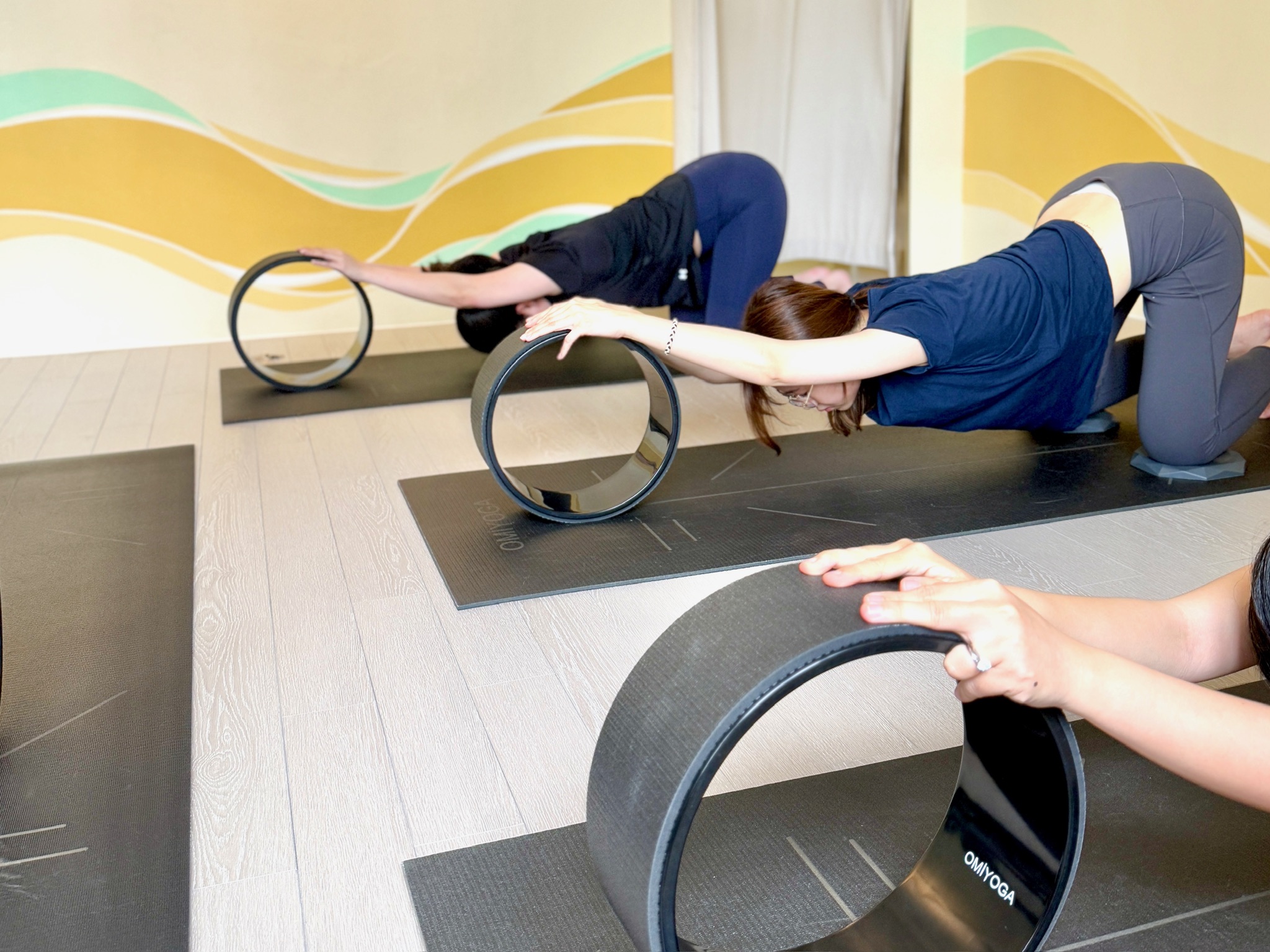
A yoga wheel can change support, angle and sensory feedback as you explore mobility and control. It does not automatically make a backbend safe, and it cannot replace a teacher’s judgement about an individual body. Before practising, share your experience and any wrist, shoulder, back or other considerations with your teacher.
Five questions to ask about an advanced class.
- Can the teacher explain the role of the shoulder girdle, thoracic spine, hips or wrists in simple language?
- Do they build core, shoulder, finger and weight-bearing capacity before adding inversions or backbends?
- What alternatives, exit routes and hands-on or verbal support are available?
- Does the class include observation, demonstration, teaching practice, feedback and safety awareness?
- Does the teacher describe their qualifications clearly without presenting yoga as medical treatment?
Progression should feel clear, not rushed.
A thoughtful progression does not ask every student to move at the same speed. Breath, core control, shoulder stability and joint mobility create a foundation before yoga wheel, inversions, arm balances or backbends are added according to the individual. Small-group teaching creates a shared rhythm while leaving room for observation; a 1:1 session can be shaped around your own pace and priorities.
OMIYOGA learning pathways.
OMIYOGA’s published directions include Yoga Wheel Teacher Training, 200-hour Hatha Yoga Teacher Training, 100-hour Inversion & Arm Balance Teacher Training, and handstand and arm-balance workshops. Dates, prices, language, availability, entry requirements and booking links can change, so confirm the current official booking page before enrolling.
Naomi Chan’s teaching background.
Naomi Chan is OMIYOGA Academy’s Founder and Head Trainer, with more than 10 years of yoga teaching experience. She holds an MSc in Yoga & Naturopathy and has taught the RYT 200 yoga teacher training programme at HKU SPACE. OMIYOGA’s published teacher-training information also identifies her as an E-RYT 500.
For a student choosing a Hong Kong teacher, this background brings together postgraduate study, advanced teaching experience and teacher-training practice. You can still ask about level, language, pace and the kind of individual guidance you will receive.